
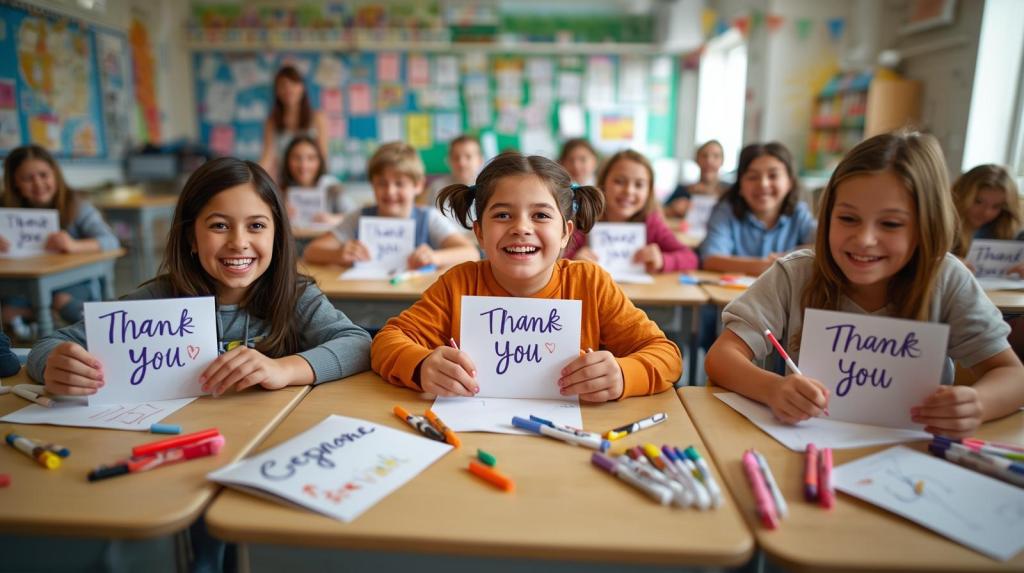
A few years ago, I created the “Thank YOU Card” Project—a reflective activity designed to help students pause, look inward, and celebrate who they are. Instead of writing to others, students write a thank-you note to themselves, acknowledging the qualities, efforts, and growth that make them unique.
Many teachers have adopted this idea and adapted it for their classrooms. In world language classes, we often ask students to write thank-you notes to community members, classmates, or family as a way to practice gratitude in the target language. However, thanking themselves brings an additional level of emotional awareness, confidence-building, and authentic language use.
In AP World Language courses, self-esteem and identity are essential themes, making this project especially meaningful during the Thanksgiving season. Nevertheless, this activity works well in any world language class and at any proficiency level—from elementary to high school and beyond. This project promotes intentional reflection, positive self-esteem, meaningful language production, and authentic cultural connection.
I am including three complete versions of the Thank YOU Card Project, each tailored to a different level:
• AP (For any AP World Language class, aligned with the six AP themes)
• Secondary World Language (Middle and High School) : STUDENT DIRECTIONS
• Elementary World Language (Simple, Positive, and Visual)
These versions can be used in any world language class, including Spanish, French, Chinese, German, Japanese, Arabic, or Latin. The structure and purpose remain the same; only the language changes.
The Thank YOU Card Project: Overview
Objective
Students create a personal thank-you card in the target language, expressing gratitude to themselves for their achievements, strengths, and lessons learned. This exercise supports metacognition, emotional well-being, and authentic language use.
Format Options
Students may choose any style that fits their personality:
– Handwritten card
– Typed card using a personal font
– Drawings, symbols, or decorations
– A creative or handmade envelope
General Instructions
While each level includes its own adapted version, the basic process remains:
1. Students greet themselves in the target language.
2. Students write thank-you messages recognizing growth or strengths.
3. Students add appropriate detail or explanation.
4. Students may include a visual element.
5. Students conclude with a closing message to their future self.
Below this post, you will find the three versions of the Thank YOU Card Project—AP, Secondary, and Elementary—each with its own instructions and models. Feel free to use them, modify them, or adapt them to the language you teach. If you try this project in your classroom, I would love to hear how it goes.
Shared Ideas from Colleagues
Recently, two colleagues shared their creative adaptations of the Thank YOU Card project. You can view and use their presentations as inspiration for your own classes:
Want more ideas like these?
Get my newslwtters with strategies, classroom activities, and encouragement every month. Sign up HERE

 DIEGO OJEDA