For many years, I thought the first class of the school year needed to be one of my most controlled classes. I wanted everything ready. The rules were prepared, the syllabus was printed, and sometimes I even had a seating chart designed before I had actually met the students. And if I had heard that a particular group might be challenging, you can imagine—I prepared even more carefully. I wanted students to know from the very first minute what they could do, what they could not do, and exactly what I expected from them.
Over the years, though, I have changed my approach. Think about what our students experience on that first day of school. They walk from classroom to classroom hearing almost the same thing: rules, procedures, expectations, syllabi, grading policies, bathroom policies, materials. By the end of the day, I imagine much of it becomes one long list of information they probably won’t remember anyway. And I eventually realized something else: I was establishing very specific rules for a group of students I hadn’t even taken the time to observe yet.
Today, I think differently about that first class. Instead of making it primarily about control, I make it primarily about observation.
There is one thing I still consider non-negotiable: I am at the door when my students arrive. I greet them. Good morning. Buenos días. ¿Cómo están? Some will answer enthusiastically. Some may barely notice because they’re talking with friends or trying to figure out where they’re supposed to be. That’s okay. I don’t take it personally. They’re teenagers arriving on the first day of school, often after a summer away from these routines.
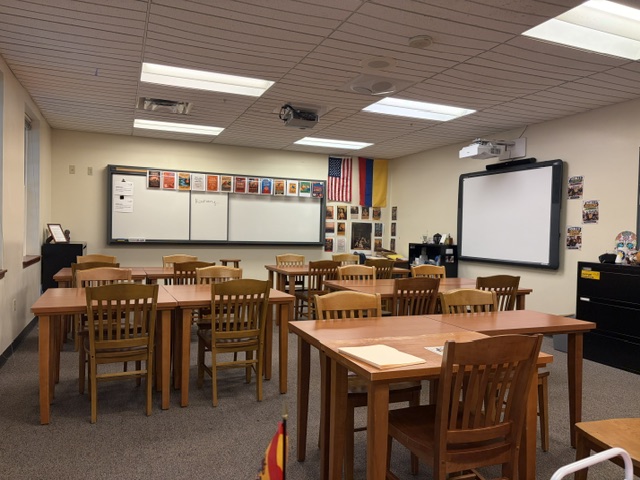
Then I let them choose where to sit. Yes, even if they sit next to their friends.
Instead of immediately explaining rules, I want to get them using the language. In a Spanish 2 class, for example, I might start with something extremely simple: ¿Cómo te llamas? ¿Cuál es tu comida favorita? ¿Cuál es una comida que no te gusta? A student might respond, Hola, soy Chris. Me gusta la pizza. No me gustan las hamburguesas. And I can react naturally: ¡A mí también me gusta la pizza! Just like that, we’re communicating within minutes of entering the classroom.
And here’s the important part: this simple activity is doing much more than breaking the ice. I’m listening. Who understands my Spanish? Who needs more support? Who responds confidently? Who is hesitant? Who can produce complete sentences? Later, I might ask students to write something very short so I can also get an initial sense of their writing. But I’m observing much more than their language.
Which students are talking while someone else is speaking? Is there a table where friends are constantly distracting one another? Who is helping a classmate? Who seems uncomfortable? Who participates without being asked? Did someone ask to leave the room twice? Did several students arrive without materials? Are there students who naturally encourage others?
The first class is giving me information.
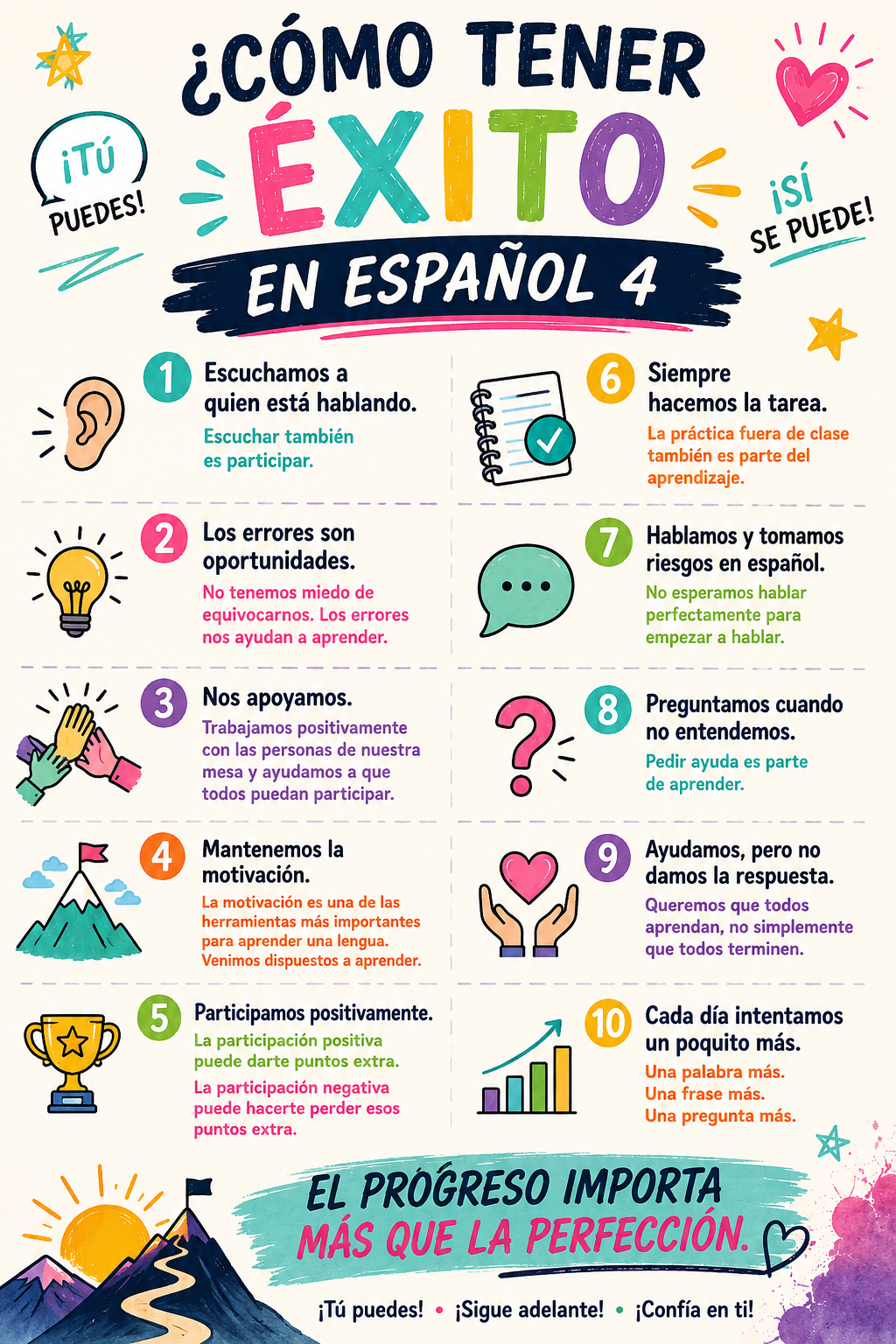
And that information helps me decide what needs to happen in the second class. Maybe I noticed that students were constantly talking over one another. Okay, then listening when someone else is speaking needs to become one of our expectations. Maybe students were reluctant to speak Spanish because they were afraid of making mistakes. Then I need to establish very clearly that mistakes are opportunities to learn. Or maybe they worked beautifully with the people at their tables. Great! I don’t need to lecture them about collaboration when they’ve already demonstrated that they know how to do it.
This is also why I no longer believe that every section of the same course necessarily needs exactly the same conversation about expectations. This year, for example, I teach two sections of Spanish 4. After my first interaction with each group, I immediately noticed important differences. One group required some adjustments, and I took several notes about things we would need to address. The other group? Wow. They surprised me with an incredible level of cooperation and responsibility from the very beginning. So why would I give both groups exactly the same lecture the next day?
They are different communities. They need different things.
And just to be clear, this doesn’t mean I’m a permissive teacher or that students can simply do whatever they want during the first class. Quite the opposite. I’m being intentional. I’m watching, listening, interacting, and collecting information before deciding which expectations need the most attention.
When we address those expectations in the following class, we can also frame them positively. Instead of creating a long list of Don’t do this and You can’t do that, we can talk about what successful participation in our classroom actually looks like: we listen when someone is speaking, we support the people at our tables, we take risks in Spanish, we understand that mistakes are part of learning, and we contribute positively to our classroom community.
There’s another benefit to this approach that I really value. Students begin to understand who you are as a teacher through experience rather than through a list of rules. They see that you notice what happens in the room. They see that you listen. They see that you value communication. And when you address something in the next class, they understand that your expectations are connected to the community you’re building together.
Classroom management isn’t about proving on day one that the teacher is in control. It’s about being strategic enough to understand the students in front of you and creating the conditions in which they can be successful.
So, if you’re about to meet a new group of students, maybe consider resisting the temptation to explain everything on the first day. Greet them at the door. Let them come in. Let them choose a seat. Give them something simple and meaningful to do with the language. And then watch. Listen. Take notes.
Before you decide what this class needs, give the class a chance to show you.
There will be plenty of time to establish expectations. But first, read the room.
Have a wonderful school year.