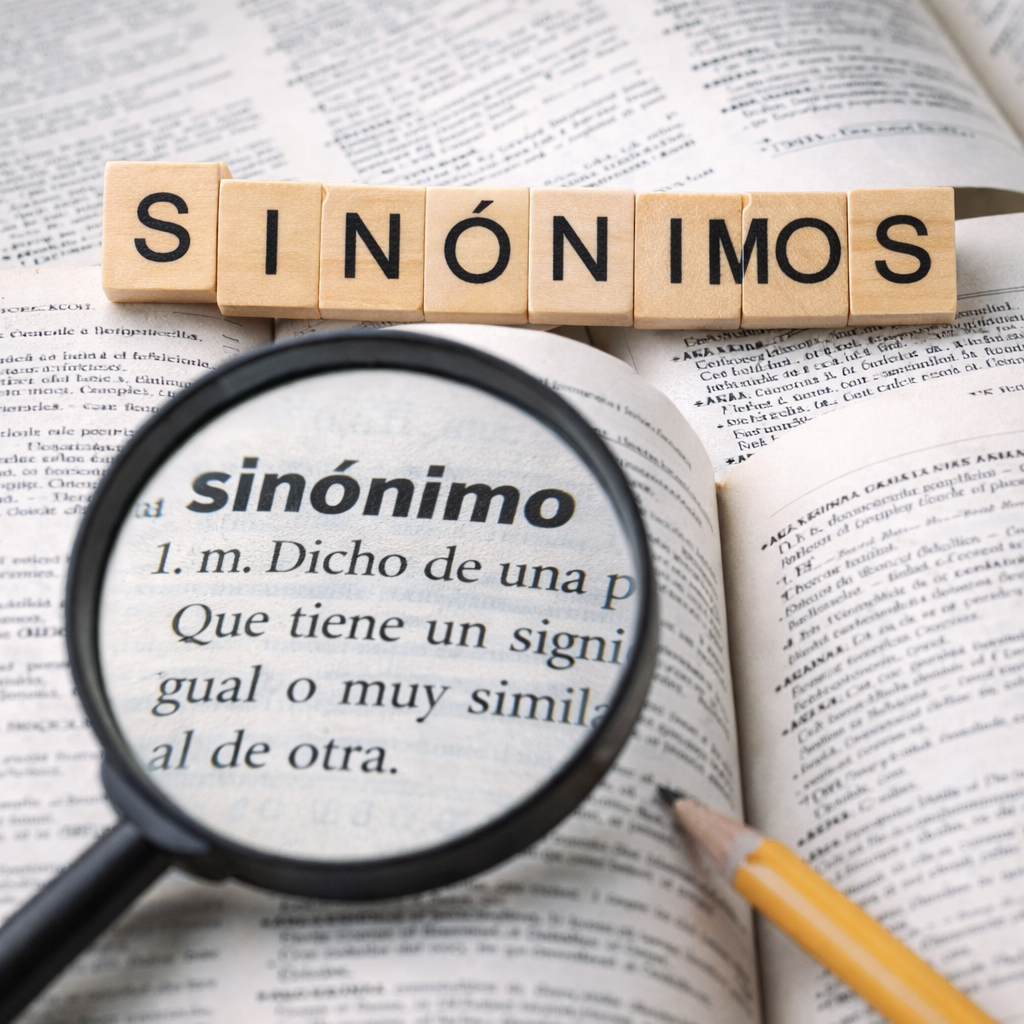
Over the years, I’ve noticed a very consistent pattern in my AP® Spanish Language students: They know what they want to say… but they don’t always have the language to say it with precision.
And that’s where we often lose points.
Success in AP® is not just about knowing vocabulary. It’s about having range, flexibility, and control of language, especially when students are expected to perform at a high level in writing and speaking—and now even more with the new Project component of the exam.
For that reason, I created a resource that brings together two key elements:
- Academic vocabulary organized by AP® themes
- Clear, usable synonyms
- And most importantly, 10 classroom-ready activities to actually make that vocabulary stick
You can access the full document HERE
Why Synonyms Matter in AP®
In the AP® exam, repetition weakens responses.
But when a student can move from:
- problema → dificultad → desafío → crisis
- impacto → efecto → consecuencia
they are demonstrating something much deeper than vocabulary memorization:
👉 linguistic control
👉 precision
👉 sophistication
And that directly impacts their performance.
From Vocabulary Lists to Real Use
This resource is not meant to be memorized passively.
It is designed to be used actively in class, across all six AP® themes, helping students connect academic language with real communication.
But the real transformation happens through the activities.
10 Activities That Actually Work in the AP® Classroom
Each of the following activities is designed to push students toward more precise, varied, and effective language use.
1. Lexical Precision Challenge
Students respond to an AP®-style question using at least three academic vocabulary words and one synonym.
Example:
Question: ¿Cómo afecta la tecnología la identidad personal?
Response: La tecnología tiene un impacto significativo en la identidad y la autoexpresión.
2. Rewriting for AP® Style
Students transform simple sentences into more formal, academic language.
Example:
Simple: La vida tiene muchos problemas.
AP® Version: La vida contemporánea enfrenta múltiples desafíos.
3. Concept Mapping Debate
Students connect vocabulary words and explain their relationships.
Example:
desigualdad → pobreza → migración
Students explain how these concepts are connected.
4. Synonym Switching Drill
Students avoid repetition by using multiple synonyms.
Example:
problema → dificultad → desafío → crisis
5. Word in Context
Students rewrite a sentence by replacing key vocabulary while keeping the meaning.
Example:
Original: Tiene un gran impacto.
New: Tiene una consecuencia significativa.
Argument Builder
Students create a short argument using required vocabulary words.
Example:
Use: sostenibilidad, recursos, impacto, desarrollo
Response: El desarrollo sostenible requiere el uso responsable de los recursos.
7. Speed Speaking
Students speak for one minute using at least four academic vocabulary words.
Example Prompt:
Describe tu comunidad usando vocabulario académico.
8. Word Ladder
Students move from basic vocabulary to more advanced academic language.
Example:
bueno → positivo → beneficioso → favorable
9. Mini AP® Presentation
Students prepare a short presentation using a required number of academic words.
Example:
Topic: La tecnología
Requirement: Use at least 6 academic words.
10. Banned Words Game
Students are not allowed to use basic words and must replace them with more precise vocabulary.
Example:
Banned: bueno, cosas
Instead: Es beneficioso (instead of es bueno)
What I’ve Seen in My Classroom
When students begin to work with vocabulary in this way, something shifts.
They stop searching for words… and start thinking in Spanish with intention.
Their responses become clearer, more organized, and more confident. And that’s exactly what we want for the AP® exam.
An Invitation
If you are thinking about how to better prepare your students for the AP® exam—especially with the new changes and the introduction of the Project component—this is just the beginning.
This summer, I will be offering the online course: Unlock Success in the AP® Spanish Language Examwhere where we will:
- Break down the new AP® exam changes in a clear and practical way
- Work step by step through the new Project
- Explore strategies and activities you can immediately use in your classroom
- Share ready-to-use materials aligned with the exam
If you’re looking for clarity, practical tools, and a more intentional approach to AP® preparation, I would love for you to join us. Register HERE
 DIEGO OJEDA