
Over the course of this year, I’ve noticed that many of my students have been struggling a bit with the multiple-choice section. Not because they lack ability, but because they often don’t have clear, usable strategies to approach it with confidence. In many cases, the strategies available online or in professional resources are written for teachers. They tend to use academic language and abstract ideas that, while valuable, don’t always translate into something students can actually do in the moment of the test. That’s why I decided to put together these 10 strategies—written in a direct, simple, and student-friendly way. These are practical moves that students can apply immediately while reading and answering questions. I hope they find them helpful.
1. Circle the exact words you must find in the text
Don’t read the question passively. Turn it into a mission.
What to do:
- Circle 1–3 key words in the question
- Then hunt for those words (or synonyms) in the text
Example (Spanish):
Pregunta: ¿Cuántas personas podrán inscribirse?
Palabras clave: cuántas personas / inscribirse
En el texto: “cupos limitados” → respuesta: pocas personas
2. Match words from the question to synonyms in the text
The text will NOT use the exact same words.
What to do:
- Look for meaning, not identical vocabulary
Example (Spanish):
Pregunta: ¿A quién va dirigido el taller?
Texto: “para jóvenes”
→ “jóvenes” = “público juvenil”
3. Cross out wrong answers aggressively
Don’t “consider” answers. Eliminate them.
What to do:
- Cross out answers that:
- Are not mentioned
- Contradict the text
- Add extra information
Example (Spanish):
Texto: “El taller es gratuito.”
Opciones:
A. Es gratis ✅
B. Es barato ❌ (not the same)
C. Es gratis para estudiantes internacionales ❌ (extra info)
4. Go back to the exact line — don’t guess
Every answer is in the text. If you can’t point to it, don’t choose it.
What to do:
- Find the exact sentence that proves your answer
Example (Spanish):
Texto: “Inscripciones a través de la página web.”
→ Respuesta: Visitar la página web
5. Focus only on the part of the text that matters
Stop rereading everything.
What to do:
- If the question is about registration → only look where registration is mentioned
Example (Spanish):
Pregunta: ¿Qué debes hacer para inscribirte?
→ Busca: “inscripciones”
→ Ignora todo lo demás
6. Watch for trap words like “always,” “all,” “only”
These often make answers wrong.
What to do:
- Be suspicious of extreme words
Example (Spanish):
Texto: “cupos limitados”
Opciones:
A. Todas las personas pueden participar ❌
B. Algunas personas pueden participar ✅
7. If two answers look correct, find the SMALL difference
One word will make one answer wrong.
What to do:
- Compare answers word by word
Example (Spanish):
A. El taller es gratuito ✅
B. El taller es gratuito para todos los países ❌
→ “para todos los países” is not in the text
8. Translate in your head ONLY when necessary
Don’t translate everything — it slows you down.
What to do:
- Translate only the key phrase if stuck
Example (Spanish):
“auspicia” → (you don’t know it)
→ Think: “What does the company do?”
→ It appears next to a logo → likely sponsor
9. Picture what is happening (quick mental image)
This helps you understand faster.
What to do:
- Create a quick mental scene
Example (Spanish):
Texto: “taller de arte para jóvenes con materiales gratuitos”
→ Imagine: students painting, free materials
→ Helps confirm answers about purpose and audience
10. Answer in order — don’t jump around
The test is designed in order of the text.
What to do:
- Answer Q1 → then Q2 → then Q3
- Don’t skip randomly
Example (Spanish):
Pregunta 1 → info in beginning
Pregunta 2 → next section
→ Saves time and avoids confusion
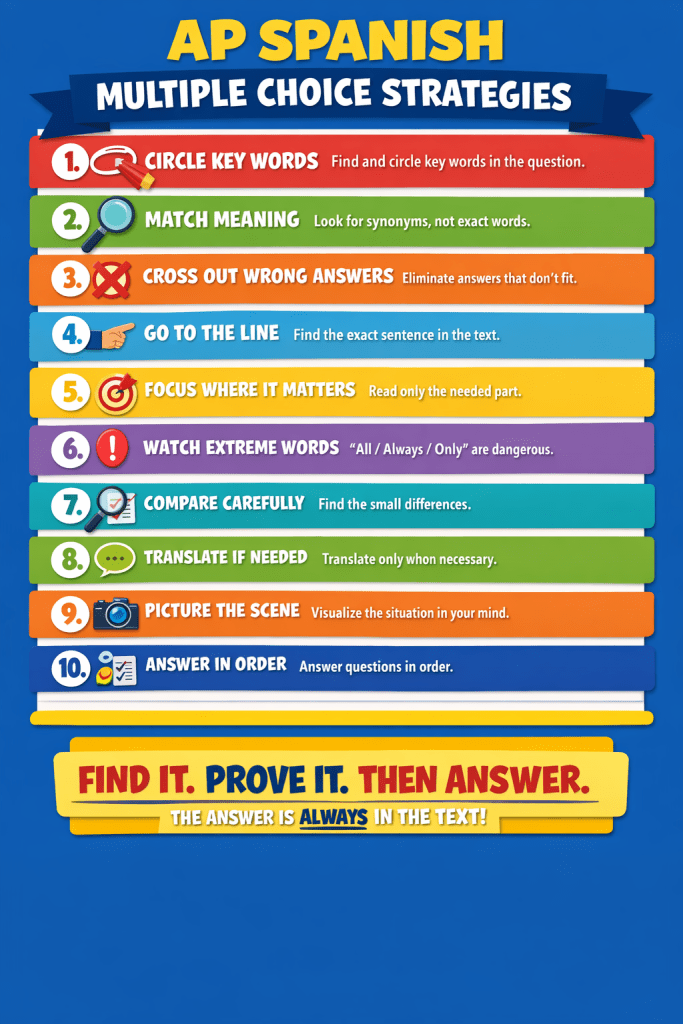
A poster for your classroom with these strategies:
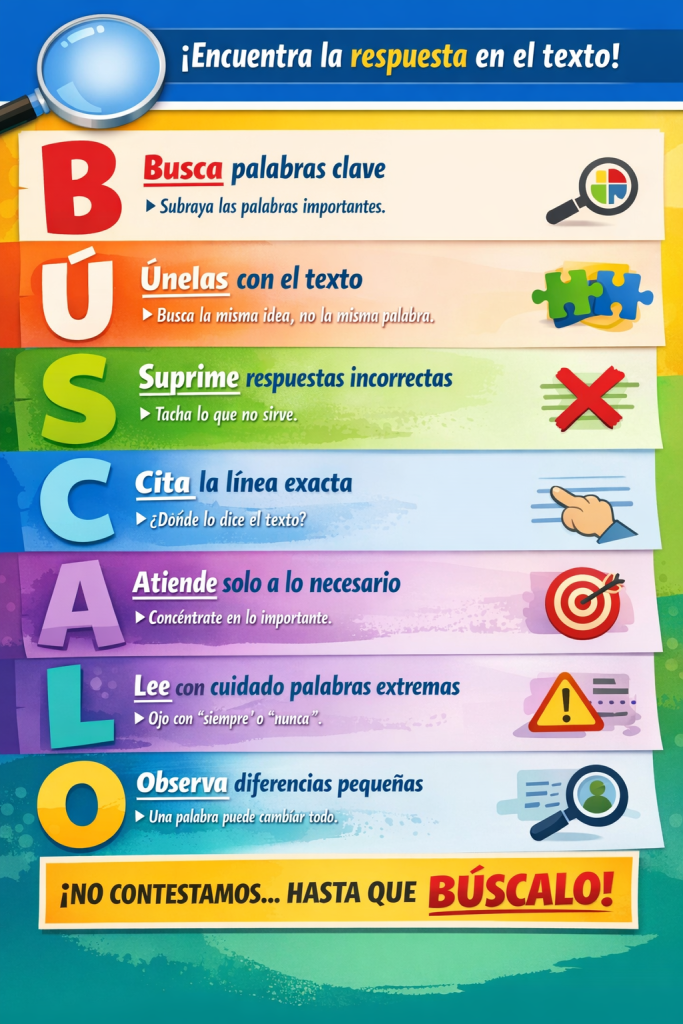
Acronym BÚSCALO in Spanish to help them remember key steps:
I hope that you and your students find this advice useful. Don´t forget to join the AP® Spanish Language Mentorship Program for more resources and FREE professional development. You can sign up HERE
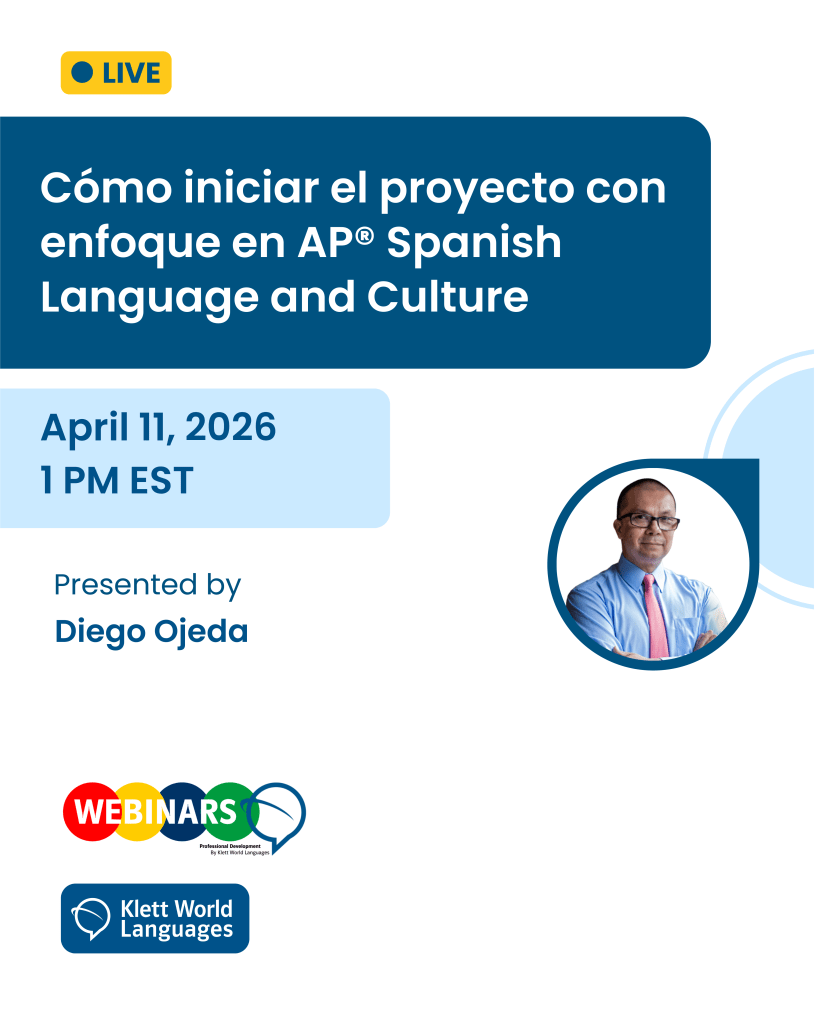
You are invited to my next FREE webinar: Cómo iniciar el proyecto con enfoque en AP® Spanish Language and Culture. This webinar will be presented on Saturday, April 11 at 1:00 pm EST. You can register HERE.
Follow me on Instagram for more professional development opportunities HERE
 DIEGO OJEDA