If you teach World Languages, chances are the 100th day of school has come and gone quietly in the upper grades. In elementary school, it’s a big deal—posters, counting activities, celebrations, smiles everywhere. But once students move on, that tradition often disappears.
That’s a missed opportunity.
This year, I decided to bring the 100 Days of School celebration into my World Language class—and the reaction was priceless. When I told my students we were celebrating the 100th day of school with four activities, their first response wasn’t excitement…it was shock.
“Wait… today is the 100th day?!”
That moment alone was worth it. They suddenly realized how much time we’ve already spent learning, reading, and growing together this year. It was reflective, grounding, and—once we got started—genuinely fun. The activities I’m sharing here are based on a reading we’re currently doing in class, but they can easily be adapted to any text or curriculum topic. Best of all, they work beautifully in pairs, keeping the focus on collaboration and meaningful language use.
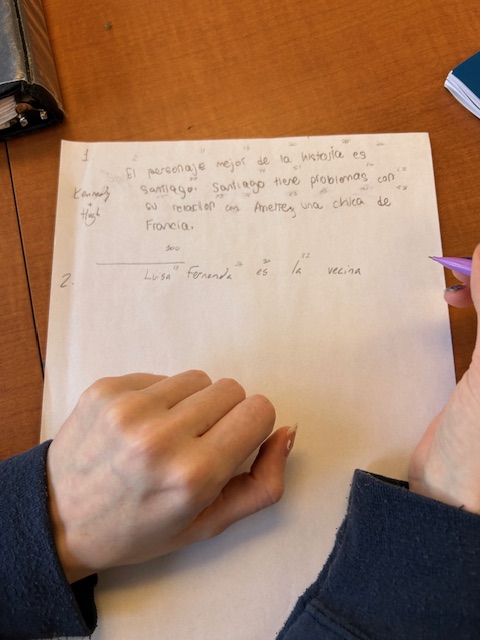
Activity 1: One Sentence, 100 Letters
Students write one complete sentence related to the story they are reading—with exactly 100 letters total (including spaces).
This activity forces students to:
- Reread carefully
- Revise intentionally
- Pay close attention to language choices
It’s amazing to watch how invested they become as they count, recount, and fine-tune their sentences to land exactly at 100.
Activity 2: The Most Popular Vowel
The teacher chooses one vowel (a, e, i, o, or u).
Students then:
- Scan the text and find words that end with that vowel
- Identify the 100th word in the text that ends in that vowel
- Explain how that specific word connects to the story
This activity blends close reading, pattern recognition, and comprehension—while sneaking in a little math and a lot of curiosity.
Activity 3: Value Vowels
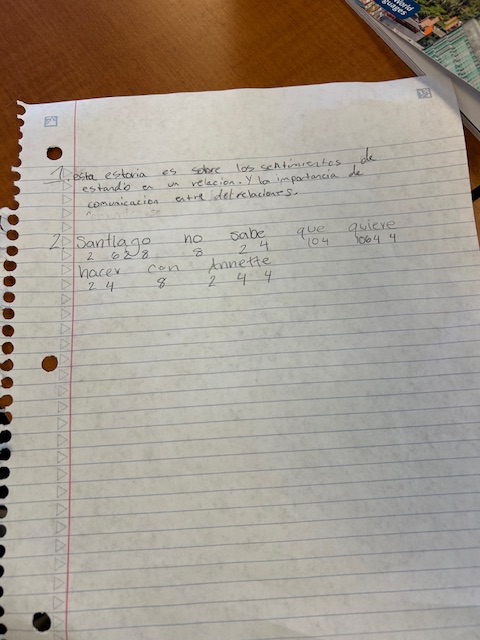
In this activity, each vowel has a numerical value:
- a = 1
- e = 4
- i = 6
- o = 8
- u = 10
Students must find a chunk of text (a phrase or short sentence) where the total value of the vowels adds up to exactly 100.
This one turns into a collaborative puzzle. Students reread the text multiple times, negotiate meaning, and stay deeply engaged—all while working with authentic language.
Activity 4: 100 in the Story
For the final activity, students identify something in the story that could realistically involve 100 units.
Then they:
- Rewrite or adapt a portion of the text
- Integrate the idea of 100 naturally into the story
For example, in 24 horas en Bogotá, the story references the Gold Museum in Bogotá. One group rewrote the scene so that the main character visits the museum and takes 100 photos of different gold pieces.
So… are you close to your 100th day of school? If so, it might be time to bring the celebration back—
right into your World Language classroom.
Want more ideas like these?
Get my newslwtters with strategies, classroom activities, and encouragement every month. Sign up HERE

 DIEGO OJEDA