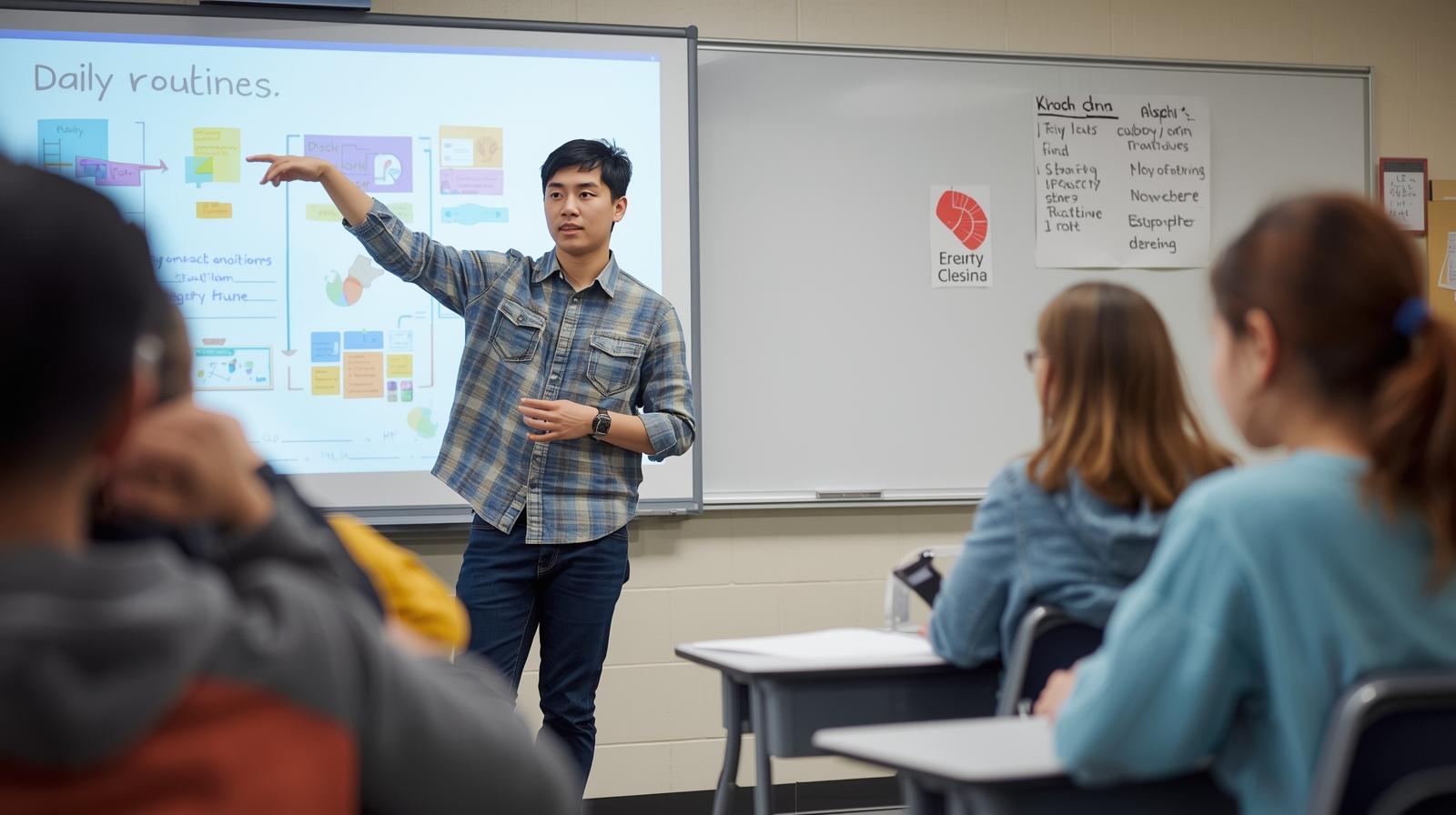
One of the most effective ways to help students improve their project presentations is to give them time to rehearse before the graded presentation. Instead of viewing presentations as a final performance, I treat them as part of an ongoing process—a space for students to practice, reflect, and grow in their confidence and communication skills. I dedicate this entry to my dear colleague and friend, Monsieur Tracy Rucker, as we are always bouncing ideas off each other on how to improve our instruction.
The Strategy
Before the final presentation day, students have the opportunity to rehearse any part of their project in front of their classmates. I encourage them to choose sections that feel the most challenging—for example, parts where they have to use new vocabulary, pronounce numbers, or expand on their ideas in complete sentences. During this rehearsal, classmates act as language coaches. They listen actively and offer constructive feedback that helps the presenter improve before it’s time for the graded version. This type of rehearsal isn’t just about correcting mistakes—it’s about collaboration, awareness, and language growth.
What Peers Can Help With (Examples from “My Daily Routine”)
To guide students, I provide a feedback checklist and model specific types of helpful comments. Here are examples of what peers might notice and comment on:
1. Pronunciation and Intonation
Peers can help each other sound more natural and clear.
Example: “When you said I wake up at six o’clock, you pronounced the number clearly, but your tone dropped at the end—try keeping your voice up a bit for a smoother rhythm.”
2. Word Choice and Natural Expressions
Students sometimes use literal translations that don’t sound natural in the target language.
Example: “In Spanish, instead of saying I take a shower as tomo una ducha, it’s more natural to say me ducho.”
(Teachers of other languages can apply the same idea—helping students choose idiomatic expressions.)
3. Grammar and Sentence Structure
Peers can notice small errors that affect accuracy.
Example: “You forgot the reflexive pronoun. It should be I brush my teeth → me cepillo los dientes, not cepillo los dientes.”
Or in another language: “Remember to match the adjective with the noun’s gender.”
4. Clarity and Organization
Listeners can suggest how to make the presentation flow more logically.
Example: “After talking about your breakfast, maybe describe what time you go to school so your routine follows a clear order.”
5. Details and Elaboration
Peers can encourage each other to add more interesting details and richer sentences.
Example: “Instead of just saying I eat cereal, you could say I eat cereal with milk while listening to music. It gives your audience a clearer picture of your morning.”
6. Visuals and Spelling
Students can also help review slides or posters for clarity and accuracy.
Example: “On your slide, you wrote escuhar instead of escuchar. Check the spelling before the final presentation.”
The Results
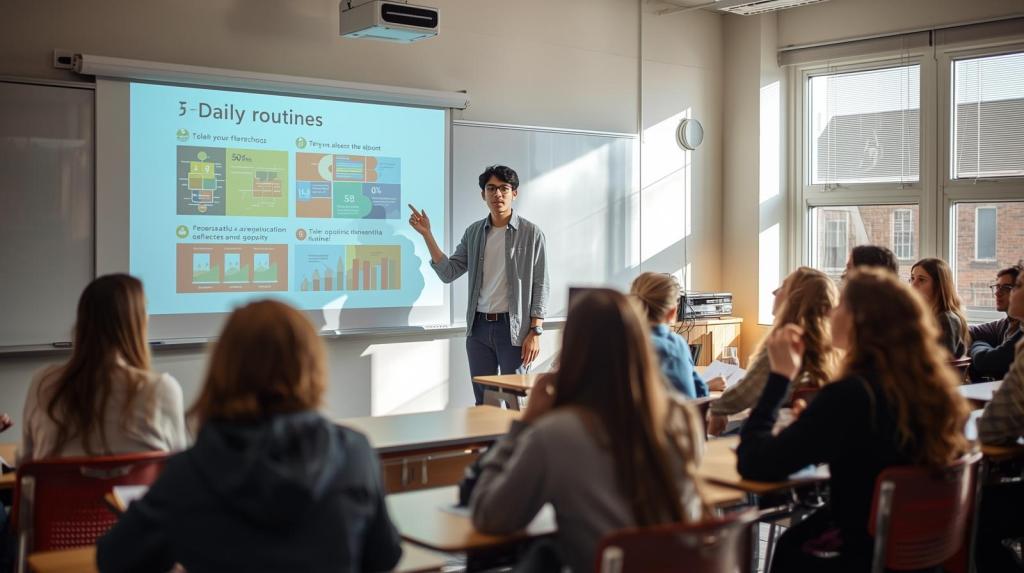
This rehearsal strategy changes the classroom dynamic. Students begin to see presentations not as stressful tests, but as shared learning experiences. They practice speaking in front of others in a low-pressure environment and learn how to both give and receive feedback effectively.
When it’s time for the graded presentation, they are more confident, polished, and linguistically accurate. Their delivery is smoother, and their understanding of language conventions is stronger.
Final Reflection
Dedicating class time to peer rehearsal is worth it. It builds a sense of community, responsibility, and collaboration among students.
Peer feedback transforms presentations from isolated performances into interactive learning moments—where students support one another, strengthen their communication, and take ownership of their progress.
Want more ideas like these?
Get my newslwtters with strategies, classroom activities, and encouragement every month. Sign up HERE

 DIEGO OJEDA